Midjourney vs Flux vs Stable Diffusion: Image Quality Compared Side by Side in 2026
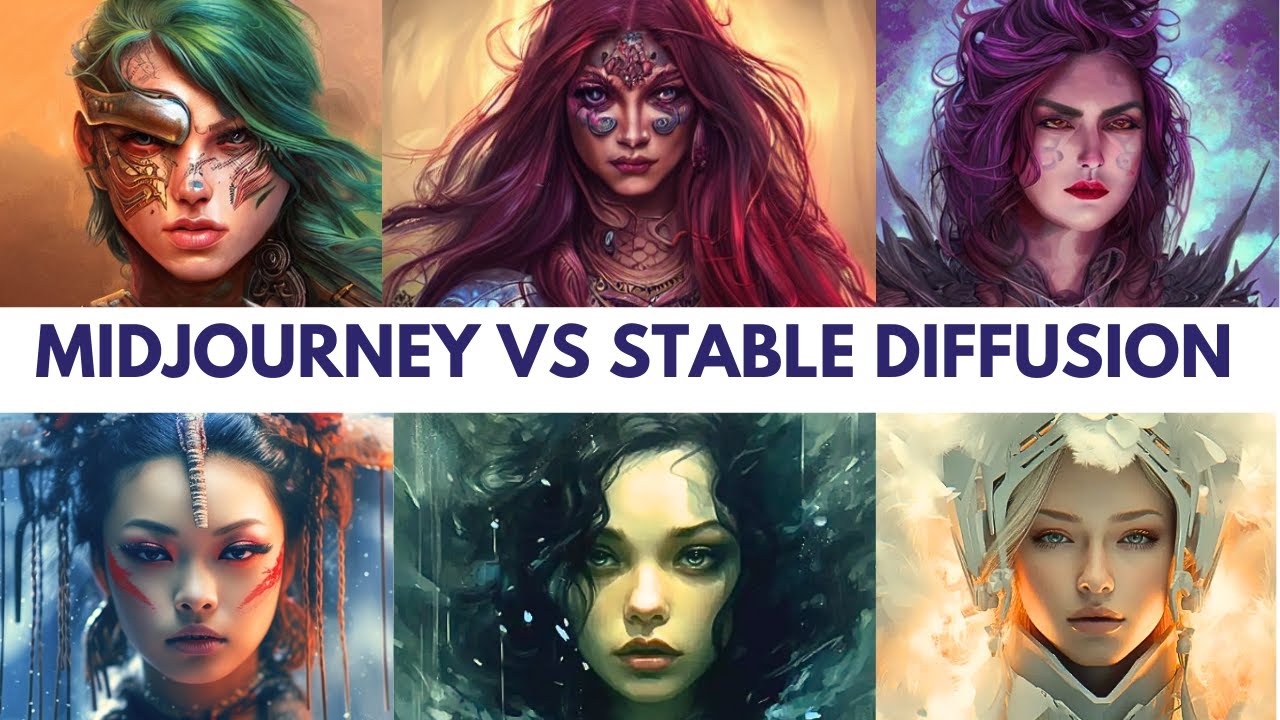
Image generation has settled into a clear three-way division by mid-2026. Midjourney owns the quality ceiling for artistic and photorealistic output. Flux has established itself as the strongest open-weight model for prompt accuracy and photorealistic subjects. Stable Diffusion remains the most flexible and customizable platform for users willing to invest in learning its ecosystem.
The question isn't which one is best — it's which one is best for what you're making.
Midjourney: Still the Quality Benchmark
Midjourney's position at the top of the image generation market has held through 2025 and into 2026 despite serious competition. The reason is aesthetic coherence — Midjourney produces images that look intentional rather than generated. The composition, lighting, color relationships, and overall visual quality consistently exceed what other models produce on equivalent prompts.
For commercial work, marketing visuals, concept art, and any output where the image needs to stand on its own without obvious AI artifacts, Midjourney remains the default choice among professional users. The platform's iterative refinement tools — variations, upscaling, region-specific editing — have matured into a genuinely usable production workflow rather than a generation-only pipeline.
The tradeoff is control. Midjourney interprets prompts with significant creative latitude, which produces surprising and often excellent results but makes it difficult to specify exactly what you want. Users who need precise compositional control or specific technical requirements in their outputs often find Midjourney's interpretive approach frustrating.
Flux: Prompt Accuracy as the Core Advantage
Flux's defining characteristic is that it does what you tell it to do. Where Midjourney interprets and Stable Diffusion requires tuning, Flux produces output that closely matches the prompt as written. For users who know exactly what they want and need reliable execution rather than creative interpretation, this is the most valuable capability in the image generation category.
The practical implications are significant for production workflows. Prompt-to-usable-output iteration cycles are shorter with Flux than with either alternative — you spend less time generating variations to find something close to your target and more time refining the specific output you wanted.
Flux's photorealistic human subject generation has improved substantially through 2025 and 2026. Anatomical consistency, skin texture, and facial accuracy are all at a level where the output is production-usable for marketing and commercial applications without extensive post-processing.
Where Flux trails Midjourney is on the aesthetic dimension — the images are accurate but less consistently beautiful. For outputs where technical accuracy matters more than artistic quality, Flux is the stronger choice. For outputs where the image needs to be visually compelling as a standalone piece, Midjourney still leads.
Stable Diffusion: Maximum Flexibility, Maximum Complexity
Stable Diffusion's position in the market is unique: it's the only major image generation platform that runs locally, supports an enormous ecosystem of community-developed fine-tuned models and LoRAs, and gives users complete control over every parameter of the generation process.
By mid-2026, the Stable Diffusion community has produced specialized models for virtually every aesthetic style, subject matter, and use case imaginable. For users who need a specific look that no commercial platform delivers out of the box — a particular illustration style, a highly specific subject matter, a niche aesthetic — there is almost certainly a community model that addresses it.
The cost of this flexibility is complexity. Getting the best out of Stable Diffusion requires understanding model selection, prompt weighting, sampler configuration, and the tooling ecosystem. For users who have made this investment, Stable Diffusion is irreplaceable. For users who haven't, the learning curve is steep enough that the quality ceiling they can actually reach is lower than what Midjourney or Flux deliver with less effort.
Side-by-Side: The Same Prompt Across Three Models
The differences between the models are most visible on complex prompts that test multiple capabilities simultaneously. A prompt asking for a photorealistic portrait of a specific type of person in a specific environment with specific lighting conditions will reveal Flux's accuracy advantage clearly. A prompt asking for a visually striking landscape or architectural concept will reveal Midjourney's aesthetic advantage. A prompt asking for output in a specific illustration style that doesn't exist in mainstream training data will reveal Stable Diffusion's fine-tuning advantage.
For abstract prompts with significant creative latitude, Midjourney consistently produces the most impressive individual outputs. For precise prompts with specific technical requirements, Flux produces the most reliable results. For style-specific prompts that require community model knowledge, Stable Diffusion is the only viable option.
Access and Workflow Integration
All three models are available through GPT Portal at gptportal.pro under a single credit system, alongside the full range of text, video, and audio generation tools. For users who switch between models based on the project — which describes most serious image generation workflows — consolidated access with Russian bank card and SBP payment support and no VPN requirement removes the overhead of managing separate accounts and payment relationships for each platform.
The Practical Decision
Use Midjourney as your default for artistic, commercial, and marketing image work where visual quality is the primary criterion. Switch to Flux when you need precise prompt execution, photorealistic human subjects, or reliable output without extensive iteration. Reach for Stable Diffusion when you need a specific aesthetic that community fine-tuned models deliver and neither commercial platform matches.
For most image generation workflows in 2026, the optimal setup is access to all three with the ability to choose based on the specific output requirements of each project.


